Storing bulk tableware in a small apartment
Case quantities are cheaper per piece and awkward per cubic foot. In a New York apartment that trade-off is real, and it is worth thinking about before the boxes arrive rather than afterwards.
What keeps indefinitely
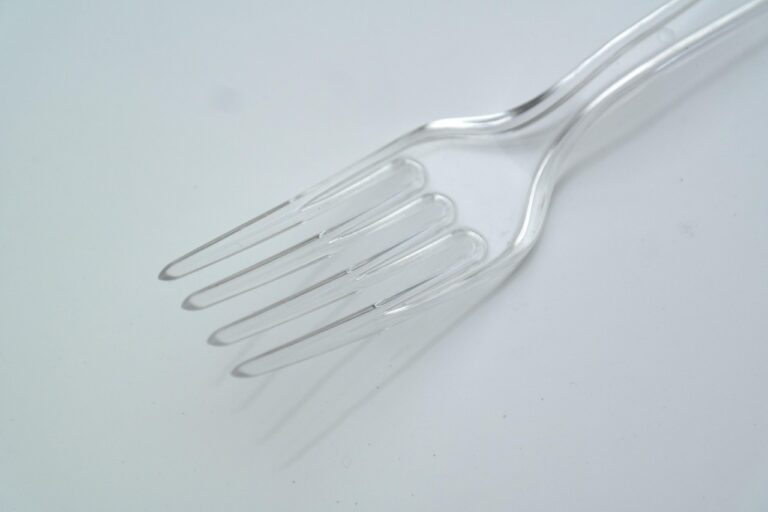
Sealed plastic cutlery, sealed plastic and PET cups, and sealed coated plates keep more or less forever in a dry cupboard. They do not degrade, they do not absorb smells through intact packaging, and they are as good in three years as on the day they arrived.
These are the items worth buying in quantity. Surplus is not waste; it is stock.
What does not keep as well
Uncoated paper plates and napkins absorb humidity and, over a long time, whatever the cupboard smells of. They are fine for a year in a dry place and less good in a damp one.
Compostable PLA items are stable but should be kept away from heat — a cupboard above a radiator or beside a boiler is the wrong place for them.
Anything opened is on a shorter clock than anything sealed, mostly for dust reasons.
What crushes
Cups are the problem. A sleeve of plastic cups under a heavy box deforms permanently, and deformed cups do not stack or seal.
Cups go on top. Everything else can take weight; cups cannot.
Moulded fibre and bagasse plates also crush at the rim, though less dramatically. Cutlery boxes are effectively indestructible and belong at the bottom of any stack.
Repacking to save space
Manufacturer packaging is sized for shipping, not for your cupboard. Repacking cutlery from a wide box into a tall sealed container often halves the footprint.
Two rules if you do this: keep it sealed, and label it. Loose cutlery in an unlabelled tub is how people end up buying forks they already own.
Do not repack anything you might return, and keep one piece of the original packaging if the material or heat rating matters — that information is not printed on the pieces.
Where to put it
High shelves are ideal: this is light, bulky, infrequently accessed stock, which is exactly what high storage is for. Under a bed works if the floor is dry. The back of a wardrobe works.
Avoid anywhere that gets damp — under a sink, beside a shower wall, an uninsulated exterior cupboard. Damp is what turns paper stock into unusable stock.
Buying to a plan
The way to keep bulk buying sane in a small space is to standardise. One plate size, one cup, one cutlery type, all plain, bought in cases and reordered when a case runs out.
Buying a different themed set for each occasion produces the opposite: many part-used packs, none of which suit the next event.
A short storage list
- Buy plain and sealed for anything you want to keep.
- Cups on top; nothing heavy on them, ever.
- Cutlery boxes at the bottom.
- Keep paper stock dry and away from strong smells.
- Keep PLA away from heat sources.
- Repack into sealed, labelled containers to save space.
- Standardise on one of each item so surplus always fits the next event.
Keeping an inventory that is actually accurate
The point of buying in cases is not repeating the purchase unnecessarily, and that only works if you know what you already have. A note on a phone listing item, size and rough count is enough, updated whenever a case is opened or finished.
Without it, the usual outcome is three part-used boxes of forks and no cups, which is the exact opposite of the intention.
Rotating stock
Put new deliveries behind or under the existing stock rather than in front of it. Paper goods especially benefit from being used in the order they arrived, and it takes no extra effort at the moment of unpacking.
What to keep accessible
Keep one modest working set — a few dozen of each item — somewhere easy to reach, and the bulk cases somewhere awkward. Everyday use then never involves opening a case, and the cases stay sealed until they are genuinely needed.
Where this sits in the shop
Everything discussed above comes back to one part of the shop: Cups and Drinkware, which currently holds 2 listings between $11.24 and $22.99. The whole of it is picked and packed at Paper House, 73 W 74th St, New York, NY, during Mon–Sat 9:30am–6:30pm, Sun 9:30am–5pm — so anything written here can be checked by phoning the counter on ((212) 724-8085.
From our shelves
- Lilymicky 300 Pack 12 oz Clear Plastic Cups, Cold Disposable Plastic Drinking Cups for Parties, Picnic, BBQ, Travel, and Events — $22.99
- Hefty Party On Disposable Plastic Cups, Assorted, 16 Ounce, 100 Count — $11.24
What we get asked about this
How long will my order take?
Handling takes 1–2 business days and carrier transit is normally 3–7 business days, so most orders land in 4–9 business days. Tracking is emailed as soon as the label scans.
How much is shipping?
Orders of $49.00 or more ship free inside the United States. Below that, a flat $5.99 covers packing and carrier handling, whatever the box weighs.
Read next
- Working out case quantities for a catered event
- Compostable, recyclable or plastic: choosing tableware
- Heavy duty versus standard plastic cutlery
Ordering from Paper House
Orders of $49.00 or more ship free anywhere in the United States, and a flat $5.99 covers everything below that. Handling takes 1–2 business days and carrier transit is normally 3–7 business days. Unused items can go back within 30 days, and if the mistake was ours we pay the return postage.
Questions about anything above go to [email protected], answered within 1 business day, or call (212) 724-8085. Full detail is on the Shipping Policy and Refund and Returns pages.